
The Timeline Nobody Shows You

Every couple gets a version of the day that looks like a beautifully designed transit map: hair at nine, photos at one, ceremony at four, dinner at six-thirty. It is a real document and it is also mostly fiction, in the kind way a movie trailer is fiction. Here is what the day actually looks like once fifteen people, three vendors and one uncooperative freeway on-ramp get involved.
The one-page version everyone signs off on
Somewhere around eight weeks out, a planner or a venue coordinator sends over a timeline. It is clean, it is color-coded by vendor, and it moves in fifteen-minute blocks like a very polite air traffic control tower. Hair and makeup starts at 9:00. First look at 12:45. Ceremony at 4:00 sharp. It looks like proof that the day has been solved.
It has not been solved. It has been estimated by someone working from averages, and averages do not know your Aunt Carol wants a photo with every single cousin individually. The document is still worth making, because a shared reference point is genuinely useful. Just know going in that it is a starting position, not a contract.
The morning has its own physics
Hair and makeup is the first thing to slip, almost without exception. The artist shows up on time and works at the pace she quoted. What the timeline did not account for is that six women at twenty minutes each is two hours on paper, and closer to two and a half in a room with good light, a bluetooth speaker, and someone's mother periodically asking to see how it's going.
Then there is the small stuff: a zipper that sticks, a bustle that needs a safety pin nobody packed, a bouquet that arrived looking slightly wrong and needs five minutes of quiet reshaping before anyone points a camera at it. None of these are emergencies. All of them cost time, and none of them show up on a schedule that was built in fifteen-minute increments assuming nothing goes sideways.
By the time the last person is out of the makeup chair, the morning is usually twenty-five to forty minutes behind, and almost nobody in the room has noticed. That gap is the coordinator's problem now, not the couple's, and that is more or less the whole job description.
Where the real time gets spent
Family formals are the single biggest source of drift on the entire day. The photographer's shot list says twenty minutes. The actual number is closer to thirty-five, because someone has to go find Uncle Gary, who stepped out for a cigarette, and grandma needs a chair brought over before anyone can start, and the blended family groupings take longer to sort out than the list suggested they would.
A first look, if the couple is doing one, runs long for a much better reason: it is genuinely emotional, and nobody wants to be the person rushing it. The fifteen minutes budgeted for it quietly becomes twenty-five, and that is fine, but it has to come from somewhere else.
Even the ceremony itself rarely runs exactly to plan. The officiant goes a little longer than in rehearsal, a reading takes an extra minute, guests linger to hug the couple on the way out. Each piece adds two or three minutes. None of it is a problem on its own. Stacked together across a full day, it adds up to something that would alarm anyone looking at the original schedule.
Cocktail hour is doing more work than anyone realizes
This is where most of the lost time gets quietly recovered, and it happens almost entirely out of the couple's sight. The caterer is asked to hold the passed apps for an extra round. The band or DJ is told to stretch the background set by ten minutes. The bar might open five minutes early specifically to buy the room something to do.
Nobody at the reception ever finds out cocktail hour ran fourteen minutes long. That is more or less the entire point of cocktail hour.
The reception rundown that never got printed
Toasts are the other reliable source of drift, and there is no polite way around it. A best man's speech budgeted for three minutes routinely runs to eight or nine, because there is no tactful way to interrupt someone mid-story about college. Multiply that by three or four speeches and the reception is now running noticeably behind its own script.
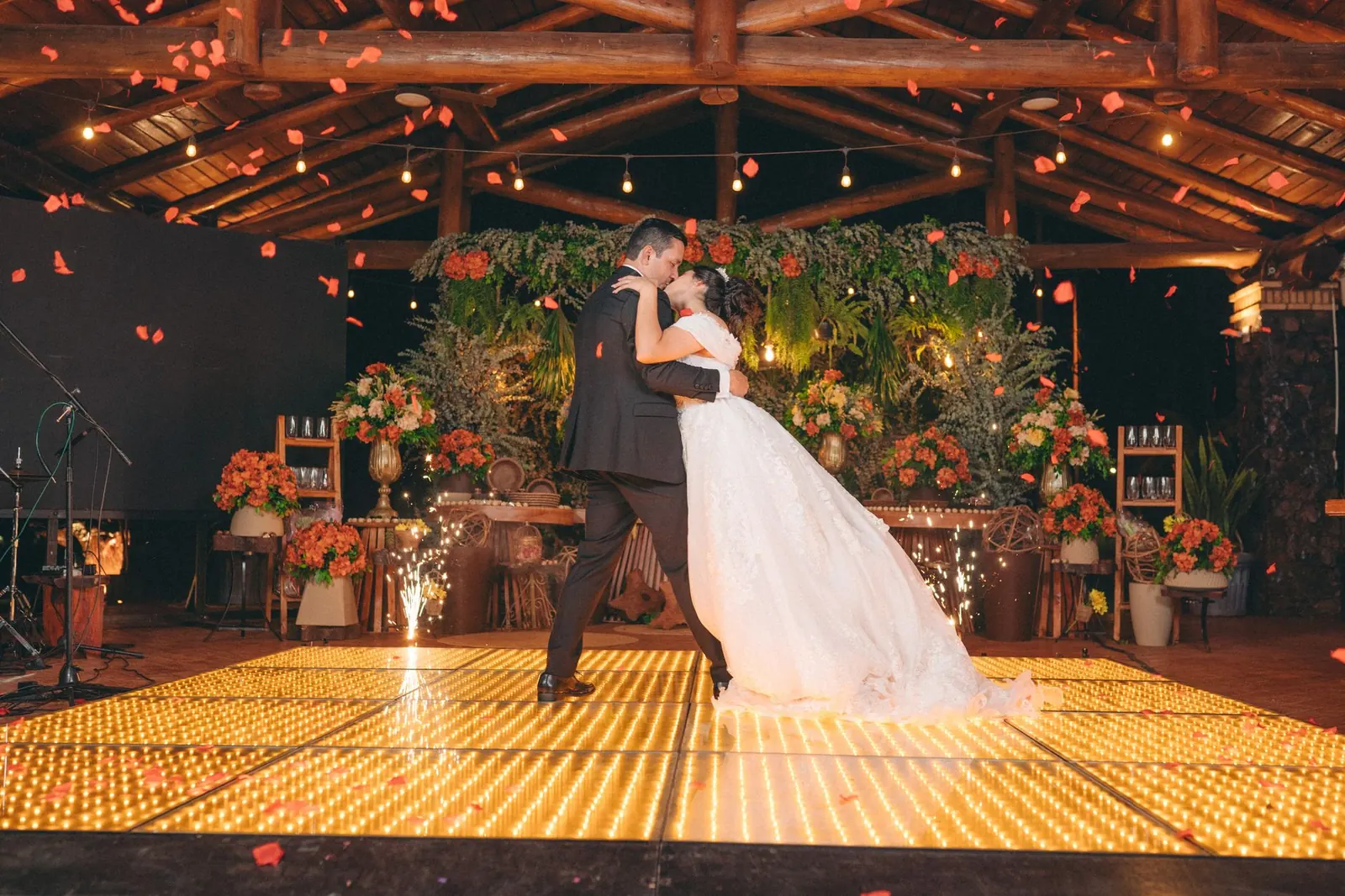
Cake cutting, the first dance, and the parent dances all get shuffled around in response, usually earlier if the room has momentum and everyone is up and dancing, later if people are still working through dinner. None of that is written down anywhere. It gets decided in real time by whoever is holding the radio.
The end of the night is its own small negotiation. The couple wants one more song. The DJ has a hard stop written into the contract. The venue has a noise curfew that the county actually enforces. What looks from the dance floor like a graceful, natural wind-down is often three people quietly working out the last twenty minutes by text.
The actual job
The coordinator's real function on the day is to be the only person in the building who knows exactly how far behind schedule everything is running, and to keep adjusting the plan without anyone else needing to know. Done well, the couple experiences a day that felt like it ran right on time, even though almost nothing did.
If you are building your own timeline, the one change that matters most is padding: add twenty to thirty minutes to any block that involves photographing more than four people at once, because that is where the real time always goes. And when whoever is holding the clipboard tells you the day is on schedule, believe them, because it is very likely a kind and useful lie.